Thursday, December 15, 2005

3:1

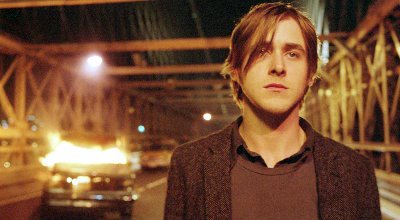
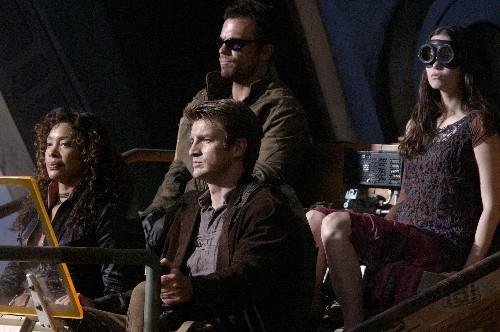
Based on evidence that will follow, I claim that they odds are three to one that a movie you watch is going to be less than spectacular. Odds are three to one that it will be boring and/or crappy. These odds were developed in response to a completely non-random sampling of three DVDs and one movie at the cinema.
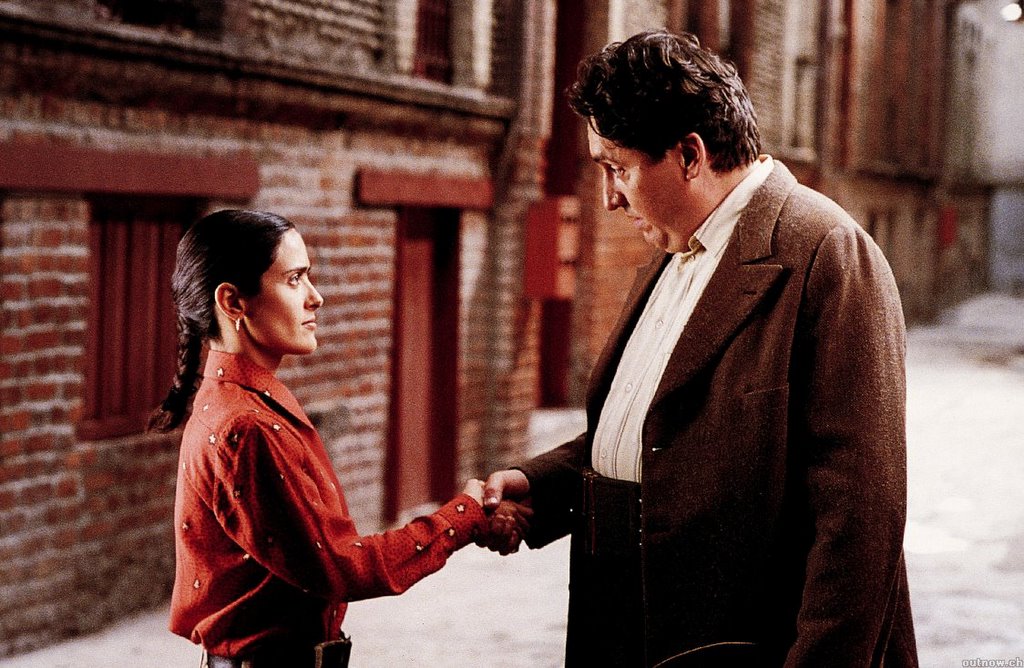
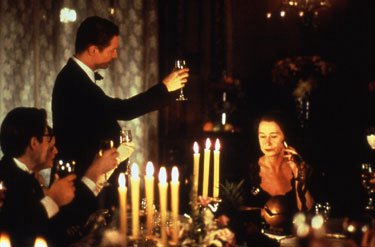
Frida (2002)

Plot 1: A biography of Frida Kahlo (Salma Hayek), who channeled the pain of a crippling injury and her tempestuous marriage to fellow painter Diego Rivera (Alfred Molina) into her work.

Boring. Sure, Hayek and Molina are terrific, but the movie moves so slowly and aimlessly that it doesn’t even matter. The way Frida’s work is integrated into the movie (a shot is frozen and then slowly replaced with a painting of the event or gradually the Frida in the painting becomes the flesh and blood one) were the only things worthy of my attention.

Also, having Ashley Judd, Edward Norton, and Antonio Banderas around for glorified cameos did nothing but cause me to wonder what was up with the stunt casting. By the time Geoffrey Rush rolled in as Leon Trotsky, I was struggling to care. The picture is beautiful to look at but a disaster the longer you stare. C +

The Opposite of Sex (1998)

Plot 2: 16 year-old Dedee Truitt (Christina Ricci) runs away from home to live with her gay half-brother, Bill (Martin Donovan), seduces his live-in lover, Matt (Ivan Sergei), and runs off to LA with Matt in tow. Meanwhile, Bill has to fend of a sexual harassment charge brought against him by Matt’s other boyfriend, Jason (Johnny Galecki), as he and the sister (Lisa Kudrow) of his dead lover search for Matt and pregnant Dedee, with help from Sheriff Carl (Lyle Lovett).

It says a lot about a movie when I think the most interesting character is played by Lyle Lovett. Okay, I’ve got a strange, October Sky-based soft spot for William Lee Scott, who played Randy, but that’s about it. It was mostly for the Lyle Lovett that I kept the movie on. Normally I don’t like Lovett, and, when I see him in a movie, I say things like, “What are you doing here?!” So good on you, Lyle.

Not so good on Don Roos, though. Why do critics like him? I know I have yet to see this year’s Happy Endings, but, otherwise, everything he writes or directors or writer/directs kind of sucks. This is no exception. C –

Aeon Flux (2005)

Plot 3: Blah blah future plague last city on earth rebels cakes. After the death of her sister, Una (Amelia Warner), Aeon (Charlize Theron, rocking some dark hair) finally gets the assignment she’s been waiting for: the assassination of Chairman Trevor Goodchild (Marton Csokas, looking fine). Naturally, when she finally gets close to the chairman, she discovers that things are not as they appear.

Before I get some ill-advised backlash about how I went to see this movie, and the cognitive dissonance that no doubt follows for you, let me remind you that trying to predict my taste in movies/my movie watching pattern is futile and frustrating.

You see, I was in quite a craptacular mood, and I wanted something mindless to help me avoid my stress. There are two types of mindless movies: those which are so stupid, so inane, so awful that their very existence is enough of a reason to bubble over with rage. This one was the good kind of mindless, where you don’t have to think about what’s happening, where every revelation is obvious without being stupidly so, and where the number of questions you have at the end of the movie are kept to a minimum and mostly involve Theron’s hair. Brisk pacing helps. Good work, team!

There’s nothing good or bad in this world but thinking makes it so, and that’s the way you need to address this movie. I wouldn’t recommend spending money on it if you don’t need to, but it makes a pleasant enough diversion if you need one. C

And, finally, it must be time for the good movie!

House of Flying Daggers (2004)

Plot 4: The local deputies capture Mei (Ziyi Zhang or Zhang Ziyi, depending on what you see) a member of the rebel group, House of Flying Daggers. She is rescued by Capitan Jin (Takeshi Kaneshiro), who plans to use Mei to find the Daggers’ leader. Captain Leo (Andy Lau) warns Jin not to fall for Mei.

Created as a companion piece to his 2002 release, Hero, Yimou Zhang’s film is here is breathtakingly beautiful. It takes a little while to get into it, but once you do you are carried away to a sumptuous and violent world.

Imagine how disappointed I was to discover that it’s not even filmed in China. Alas, it was the Ukraine.

I don’t have much to say about it except that you should watch it. See a single drop of blood splash onto a dagger while it’s flying through the hair. Admire the bath Jin creates for Mei along the road. Stare in wonder at the marvel of choreography and cinematography that make up this intoxicating picture. A -

Wednesday, December 14, 2005

In the beginning, things were Golden

HFPA has thrown down the gauntlet, which means that rusty cogs of the awards season have been oiled and put into motion.

Okay, sure, the LA critics awards are considered the true opening bell of American awards season, but there's no point in arguing the start date based on something that isn't televised (didn't those nice people in Venice already show Good Night, and Good Luck. and Brokeback Mountain the love, after all?).

The point is: the nominations are out. They've been out for two days, folks! Two! That's enough time for you, as I did, to say things like "Hoffman Capote?" "Really? Johnny Depp?" or even "I'm pulling for you, Mary Louise! Take those bitches down!"

So, time for you to throw down as well. Does Phoenix have a lock? Could this be the long promised comeback year for Woody Allen?

More importantly, which star is most likely to wear something extravagantly awful? Or behave in a completely ungracious Annette Benning kind of way? Let's be completely speculative and mean!

Yes, I will be posting about movies again sometime soon. Movies, plural. Keep yer pants on.

Wednesday, December 07, 2005

Rent (2005)

Summary: Aspiring filmmaker Mark (Anthony Rapp) and musician Roger (Adam Pascal) are roomies living rent free in a loft (which Roger hasn’t left in a year) owned by their former roommate, Benny (Taye Diggs). Mimi (Rosario Dawson), a junkie/exotic dancer, lives downstairs. Roger and Mimi meet. Roger likey. Mimi likey. But Roger no likey the drugs because that’s how he and his ex ended up HIV positive. In fact, that’s probably how Mimi ended up in the same boat. Meanwhile, Mark and Roger’s other former roommate Collins (Jesse L. Martin), comes home to roost after getting fired from his teaching position at MIT. He meets Angel (Wilson Jermaine Heredia) after he is mugged. Collins likey. Angel likey. They’re both positive, too. Finally, Mark’s ex, Maureen (Idina Menzel), needs Mark’s help with her latest performance piece, much to the chagrin of her girlfriend, Joanne (Tracie Thoms).

Alright, I’ll bet you are wondering why anyone would want to see this musical in the cinema when they could see/have seen it on stage. Good question. I’ve got answers for ya.

If you have already seen it:
- Minus Dawson and Thoms, you get to see the original Broadway cast.
- Did you sit in rows A-G last time? No? Well, now you can see all the action up close and personal.

If you haven’t seen it yet:
- Do you really think you are going to get another chance to see this cast this close this cheap? You’re not, so stop thinking that way.

Plus, now that it’s been out in the theatres for awhile, you might be able to enjoy it without the sing-a-long crowd. On the other hand, a couple burst forth into song at the end of my screening.

I’m about to make up the names of the songs based on their lyrics, so bear with me.

See, the great thing about moving theatre off the stage is the way you “open up” the piece. “Do you know the way to Santa Fe?” moves to the F train. “Out tonight” starts on the stage at the Cat Scratch Club. “Take me (or leave me)” disrupts Maureen and Joanne’s engagement party at a swanky club.

Of course, screenwriter Steve Chbosky also loosens up Jonathan Larson’s musical, trading in the lyricism of the interludes between numbers for actual dialogue, weaving flashbacks into songs so Mark doesn’t have to wear his captain exposition cap.

Chris Columbus (director) gives us some of his best work yet. More often that not, on stage a musical relies solely on the ability of the performers to play it to the rafters. But with a camera in their faces, someone can focus on the quiet moments, allowing the actors to go beyond emoting and internalize their characters.

Adam Pascal, if you weren’t married with two kids, I would have two words for you: call me! I didn’t get the Roger appeal before, but I see it now. Thoms, I don’t care who you are replacing: you rock! Rapp, you should call me as well just for being that awesome. In fact, all the performers turn in exhilarating performances at the end of the day. It can be breathtaking to watch.

Also, no one was more excited to see Wayne Wilcox (Naked Marty, for those in the know) up there than I was. Not even Wayne himself. That’s what happens when you choose Logan, Rory.

So, if you were looking for a review full of lovely, positive comments, here is it.

That is to say, don’t keep reading if you don’t want to see anything negative.

Now, maybe it’s just that I have more experience with movies than live theatre, but did anyone else start questioning this movie like no body’s business? Collins got fired for his radical theory from MIT? The same people that keep Chomsky around? Since they don’t have to pay for rent or heating or electricity, why are Roger and Mark so damn broke all the time? Is it really that much of a betrayal of their bohemian lifestyle to, say, wait tables? Why doesn’t Mark get job at a small repertoire theatre? That would be right up his alley, I would think. If Roger hasn’t so much as left the loft for a year, from where does he get his AIDS drugs? How does he pay for them?

Can Diggs act? Did anyone else notice how disproportionately large Rapp’s head is to his body? That the lack of checked pants made Roger’s wardrobe look not at all dated? And, frankly, neither was Mark’s most of the time? And Angel’s glaring anachronism that nearly made me tear down the screen? Or how Benny’s redemption was conspicuously absent? Or how Rapp refused to abandon his lyrical lines while everyone around him spoke normally? Okay, I liked that last one. But still.

Also, all those homeless people live in a tent city outside of a giant, empty, unlocked building? Where Maureen keeps her equipment for days that no one steals? And Mimi walks home from the club by herself every night? Smart girl.

Finally, and maybe this is one of the benefits of having only one set (you never know exactly where the action is taking place), how Collins didn’t bitch-slap Mimi and Joanne at Angel’s interment I’ll never know. ‘Cause, I don’t know if I’ve brought this up in the past, but I can’t stand grandstanding at funerals. I find it despicable.

Here’s what I am telling you: if you spend too long thinking about it, you realize that most of these characters are assholes that don’t deserve your sympathy. I recommend not thinking about it.

Even so, I doubt all these questions have anything to do with the way Rent is spectacularly flopping as I write this. My theory? A few things: Purists aren’t going to want to see their beloved musical on the screen. Most of the people who haven’t yet seen this operetta on the stage probably weren’t holding out for a big screen adaptation. And, without a big name director or a big name cast, there’s little draw for anyone outside of Rent-heads to head on down to their local cinema. How many of you even recognize Martin from Law & Order or watched Diggs’ show on UPN last year? Sure, Dawson’s got a good number of credits on her filmography, but could you name five off the top of your head? More than that, could you name three where you were wowed by her acting?

Don’t get me wrong: I like Martin, Diggs, and Dawson. I’m just saying that the average person streaming into the theatre probably could not identify all three.

Although I did question it later (B-), I did lose myself in the movie while watching it (A+), which averages out to an A- .

Thursday, December 01, 2005

Thumbsucker (2005)

Brief: Seventeen year old Justin Cobb (Lou Pucci) attempts to quit sucking his thumb with the help of his hippie orthodontist, Perry (Keanu Reeves), and, later, Ritalin. His earnest desire for change creates chaos in the world around him, particularly for his mother, Audrey (Tilda Swinton), a nurse who has taken a position in a rehab clinic for celebrities; his father, Mike (Vincent D’Onofrio), a former footballer who is now the manager of a sporting goods store; his debate teacher, Mr. Geary (Vince Vaughn); and his little brother, Joel (Chase Offerle).

I know that’s not the most tidy plot description I have ever written, but I had a hard time fitting everyone’s names in there. In fact, I had a hard time figuring out where to go after the first sentence. There’s also some business with Benjamin Bratt, who plays a TV celebrity that gets checked into Audrey’s rehab centre, and with whom Justin believes her to be in love.

One of the benefits of writing these reviews for my pleasure instead of as a job is that fact that I don’t have to read the book before hand. Have you ever read a review of an adaptation that didn’t compare the movie to the book and find fault with it? I doubt it. But here I am, trucking along, blissfully unaware of Walter Kirn’s novel. I understand that Justin’s got some incestuous feelings towards Audrey in the book that don’t come across in the movie, which is fine by me. There’s a lot going on anyway.

So, you know how when you usually see Reeves in a movie, you are laughing? At his “acting”? Because if there was a town called Woodenville, Reeves would be the mayor, the sheriff, the judge, the prosecutor, and any other job they needed him to do. What I’m saying here is that he’s a bit wooden up there on the screen. One might call him “lifeless.” So when a movie trilogy like those Matrix thingies came along, it seemed like a perfect match for Reeves. All he had to do act confused, be three steps behind everyone else, and “know kung fu.” Boy, howdy, can Reeves handle those three.

Imagine, if you will, that there was a part out there that was even more tailored to Reeves. Someone was going to let him on the joke. Someone was going to make his flat line readings and his ability to stare into the middle distance work for him. And, quite suddenly, you are marvelling over his light comedic touch and deadpan delivery. You are laughing because he is being funny! Congratulations! You, your imagination, Walter Kirn, and writer/direction Mike Mills have made your dream come true.

I know I should be praising Pucci’s star turn, or writing about how D’Onforio is amazing, or about how I’ve always wanted a movie with the two Vinces together (for I have), or talking about how Offerle is awesome, but Reeves really deserves that much attention.

So, yeah, Pucci. Go forth with thunder, kid. This is your sophomore outing, and the world in now your oyster. I’m going to spend the next week laughing over the idea of Justin screaming “POWER ANIMAL” or chastising his mom with, “I come home to celebrate, and you can’t tell me about the celebrities you work with?!”

So I didn’t get the dream sequences or why the movie ended with that completely unnecessary money scene or why it looked like it was set in the 1970s or, to be honest, Tilda Swinton. We’re cool. B

Monday, November 21, 2005

Walk the Line (2005)

Premise: Covering the 20 year period of Johnny Cash (Joaquin Phoenix)’s life, the 50s and 60s, when he toured constantly and survived on pills and liquor, frustrated by his obligation to his wife, Vivian (Ginnifer Goodwin), and his desire for his true love, June Carter (Reese Witherspoon).

In other words, not my Johnny Cash – the black robed father figure preacher man. More like my dad’s Johnny Cash.

Okay, let’s get a couple little things out of the way: (1) I’m naturally biased towards a movie starring my favourite actor and about one of my favourite couples. It’s a movie targeted directly at me squared. (2) This is going to be a long review. Buckle up.

While watching the movie, the number one word I used to describe it was “electric.” Afterwards, I thought enough to add “balls out.” One of these epithets has never been used in the history of Feria Films, which should give you a sense of where this movie sits in my mind.

Here’s the thing about biopics: If you attempt to tell an entire life story in 2-3 hours, you tend to discredit huge chunks of an individual’s life. Furthermore, when portraying a public figure, there is a fair amount of pressure on the actor playing him/her. You have to contend with the public impression of the persona, the written material about the person, and the personal recollections of family and friends. In other words, it’s tough. You can try to inhabit the skin of the person you are portraying, matching his/her mannerisms and intonations exactly. When done well, you end up with something (I hear) like Philip Seymour Hoffman in Capote. If you take this too far, you end up with a complete caricature. You could go the route of approaching the person as a character, rather than a fully fleshed out public individual, but, if this doesn’t come off as a caricature, it will come off as incomplete.

So, basically, if you don’t have the requisite talent to become this other person, you are completely screwed.

What makes Phoenix and director/co-writer James Mangold’s choice balls out here is their decision was neither to aim for a spot-on “impersonation” nor to treat the man (with whom they worked before his death in 2003) as a character. Phoenix, under Mangold’s direction, sought a much loftier goal: to capture the essence of the Man in Black.

To wit, I am here to tell you that Phoenix nails it. There is no other actor on the market today that can so convincingly portray a plethora of emotions simultaneously. At any given moment, Phoenix could be smart, stupid, sexy, charismatic, angry, confused, sorrowful, violent, lustful, loving, and repentant. I thought of a lot more emotions he conveyed, but, much like my focus on Strathairn in Good Night, and Good Luck., I could go on all day. Phoenix’s Cash, rather than acting with full knowledge of the way things would turn out, played Cash’s addiction beautifully: rock bottom never came soon enough. He never intended to hurt Vivian, but he didn’t know how to stop himself from wanting June. He didn’t want to destroy his family, but he didn’t believe he could survive without the pills.

Haunted by the loss of his best friend and older brother, Jack (Lucas Till), and the knowledge that his father (Robert Patrick) will never consider him a suitable substitute, Phoenix is, above all, a big ball of hurt. When he sneers at Sam Phillips in his first stiff audition, well, you know he’s in for a rough ride. Which is good for you, the viewer, as it means you are in for a breathtakingly balls out and electric performance. As a bonus, Phoenix does all the vocals (!) and plays the guitar (!!) himself. Take that, Jamie Foxx.

The electricity that crackles and snaps in Mangold’s tense opening sequence positively threatens to consume the whole theatre whenever Witherspoon and Phoenix share the screen. Witherspoon, to her immense credit, never allows Carter to come across as some sort of a Madonna, regardless of her position as Cash’s saving grace. She may have helped him kick the pills and booze, but she certainly didn’t take his drunken antics before that lying down. John Carter Cash never knew it until they made the movie, but this was the woman who threw beer bottles at Cash and crew in a fierce admonishment. This was the woman who penned Cash’s (arguably) most famous song about a passion so fiery and dangerous that it threatened to burn them both alive: Ring of Fire. She was strong and sassy and a pistol if there ever was one. Witherspoon brings all of this and more to what would be, in lesser hands, nothing more than a platitude spouting cipher. As a bonus, she does all the vocals (!!!) and plays the autoharp (!!!!) herself. Take that squared, Foxx.

Not that I have anything personally against Jamie Foxx. I’m just sayin’.

The only misstep I can think to point out is in the way Vivian is written. Maybe it’s Goodwin’s performance, although I always did enjoy her as Diane on Ed. Maybe, though, Mangold and co-writer Gill Dennis didn’t, or couldn’t, give Goodwin much to work with. Or maybe she was a hellish shrew who thoroughly resented her husband’s career. I don’t really know.

As for Tyler Hilton as Elvis or Waylon Malloy Payne as Jerry Lee Lewis (with whom Cash did assuredly tour), I didn’t buy Hilton as Elvis until he stepped behind the mic. Suddenly, he became Elvis. Weird, huh? Payne makes more of an impression as Lewis, who, seriously, always seems out of his mind. I could have been partial to him, however, as I think Payne as Lewis looks like James Marsters as Spike. Waylon Jennings’ son Shooter playing the father? Sure, why not.

Speaking of Buffy, how great was it to spot Big Gay Larry as Marshall Grant, Cash’s bass player? It was great is what it was.

At the time that I am writing this review, the current user comment on IMDb says, and I quote, “Joaquin Phoenix is brutally hot as Johnny Cash!!” Although I initially cracked up (user comments tend to be written by morons), it’s a fair assessment. Not only do I also think Phoenix is and was hot, it is brutal. Probably not in the way “lgran81” meant, but it is true. Phoenix’s portrayal of the towering legend never betrays his public persona, the volumes of material about a country singer who managed to be fully accessible to those who don’t even like country, or the many fond memories of those who knew him (Carter Cash thought Johnny himself would have approved, after all). It’s not a betrayal because it is exactly what lgran81 thinks it is: brutally ho[nes]t. A

P.S. The smatter of appulase afterwards made me wonder if those hippes over at the Bytowne would have given in the standing O treatment it deserves. Probably.

P.P. S. I knew that that wizard would trounce the Man in Black at the box office opening weekend. I’m cool with that. But now that you’ve seen the longer movie, I recommend that you see this film.

Friday, November 18, 2005

Monsoon Wedding (2001) and Vanity Fair (2004)

The previously mentioned Mira Nair double bill!

Plot 1: Big ol' wedding, monsoon season, lots of shit goes down. Alright, the bride-to-be is engaged in an affair with a married ex, acting out her cold feet in the face of her impending arranged nuptials. Her whole family descends upon the house preparing for this lavish wedding, and all sorts of antics and secrets come to a head, as they so often do in similar movie situations.

Plot 2: Becky Sharp's a social climbing, back-stabbing beyotch, letting no friend stand in her way of getting to the top of the heap.

Here's the problem with this double bill: I've been putting it off because I have nothing to say about either movie. The picture above, from which movie I'll let you guess, I picked for representing my two fav characters in the movie (the event planner and a housemaid, respectively) and for being pretty. I enjoyed the movie and laughed a fair bit, but I'm still convinced that a fair chunk of it went right over my head. At a certain point, given the consumption of marigolds, I became convinced that they were a lesser form of poppy/opiates, poised to overtake the world's heroin market with their readily available americanized form.

I know that's not true, but it's a funny lens with which to view the movie. (B+)

As for the second offering, one word: boring. Bored the hell out of me, really. As much as I like Reese Witherspoon, and as much as I think she works her little tushy off in every role, I again chose a picture that did not feature the main character.

Why, you might ask? You sure do ask a lot of questions. Because, for the life of me, even though that I knew full well that they softened her up for the film's sake, I didn't give a flying fig about Becky's plight. There were too many good looking men with mixed motivations to distract me. Because she screeched like a howler monkey.
Plus, and I don't know if I mentioned this, it was so very boring. Monstrously boring.

So, quite magically but predictably, the combination of a director I thought I liked based on previous work with a writer I knew I liked based on previous work (Julian Fellowes, he of Gosford Park fame) equaled crap. Too bad, so sad, quickly forgotten. C-

Wednesday, November 16, 2005

Good Night, and Good Luck. (2005)

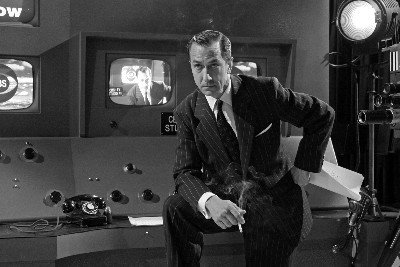
Premise: In 1953, journalist and host of CBS’s “See It Now”, Edward R. Murrow (David Strathairn), together with his producer, Fred Friendly (George Clooney), and rag-tag team decide to take the bullhorn against Senator Joseph McCarthy (himself)’s red scare.

Okay, so the team’s not really rag-tag. I just liked the way that sounded. I also acknowledge that Murrow and his crew were neither the first nor the last to attack McCarthyism.

Maybe I’m a little bit biased because this movie is so obviously aimed at my bleeding liberal heart. Maybe I’m a bit biased because the Bytowne has decided to crank it up several notches to get me back in the fold. And maybe, just maybe, I was seduced by the spontaneous applause at the end of the film from in the packed cinema because it’s just been too damn long since a movie made anyone want to stand up and cheer.

Even so, I’ve been racking my brain since I saw it on Friday, and I still cannot come up with a single thing I didn’t like about this sparkling gem.

Sure, the sight of a smoky, darkly lit room where reporters discuss the day’s papers from across the country to suss out what news is worth mention on television that week sends my heart into quasi-orgasmic fits of glee because it matches my image of what newsrooms looked like back when the news really mattered. Quite obviously, it matched director/co-writer/producer/supporting player Clooney’s image as well.

I’m going to have to send him a little note thanking him for his decision, circa 1998, to stop sucking and rock has hard as his old school matinee idol good looks, talent, and pitch perfect combo of smarm/charm would let him.

Perhaps the success of this movie is wrapped up in the casting of Strathairn has the euphonically named Murrow. He’s a slight man, not all that well known, and certainly not go-to Hollywood leading man. And yet, there he is: pitch perfect. Cigarette smoke slowly curling away from his perfect placed hand, beautiful three piece (!) suits, power, passion, regret, resignation, humility, confidence, and sympathy. Anyone else would need a three page monologue to get what Strathairn gets out of a single tilt of his head. The way he can never quite look the camera in the eye as he wished them good luck is filled with the knowledge that it will never be enough. Strathairn’s Murrow knows right well that he could be ruining the careers and lives of the men in the room with him when he decides to take on the Senator, and, no matter how passionately they throw themselves into the task, he can never quite get that guilty look out of his eye. I could go on and on about every single gesture and line, Strathairn was that good.

Some people felt that the subplot about the secretly married Robert Downey, Jr. and Patricia Clarkson (a fact that could get them fired at the time) was a bit tacked on. Nothing involving the two of them could ever be wrong, I say.

Not everyone was into the interspersed jazz numbers. I came to the somewhat befuddling conclusion that George Clooney is jazz. I know, I know, it makes no sense in the clear light of day. I still can’t shake the idea that there is some parallel between George Clooney/film and Miles Davis/jazz. Plus, I found it a refreshing alternative to a traditional score full of emotional violins and triumphant trumpets.

Why have Senator McCarthy play himself, people have asked. Clooney and co-writer Grant Heslov are simply doing exactly what Murrow, et al. did fifty years ago: letting the Senator damn himself with his own words.

Most of all, why does a movie set half a century in the past have more relevance today than anything else I have seen this year? Because back then the news mattered. It meant something. It stood up to the government instead of playing its lap dog. Bill O’Reilly may net two million viewers a night, but he represents one incredibly biased part of the spectrum.

I was talking with my grandmother within hours of my screening, and I told her what movie I had just seen. She told me that back then, when television networks still acknowledged this new medium as an educational tool, news anchors weren’t all part of a bland, indiscernible passel nor did they occupy the loathsome celebrity realm of “personality.” Back then, back when the news really mattered, the anchors on these shows were people to be respected and admired. They were heroes.

George Clooney, for telling a bittersweet true story, and for attacking the embedded quality of news outlets today, you are my hero. A+

Monday, November 14, 2005


"And that's why you don't try to teach your son a lesson."

Despite my denial, Ave was right. Those idiots at FOX have cancelled what is easily the funniest show on television.

I should be using this time to write a review of the fabulous Good Night, and Good Luck or the suggested Mira Nair double bill, but I'm not.

I'm too sad about all things inevitable. Good night, Arrested Development. Good luck, Jason Bateman. Someday you'll find a network to appreciate dry wit and sharp comedic timing, packaged togethr nicely with boyish good looks. We'll always have Teen Wolf Too.

I'll gladly give it back if FOX will accept that a show gets less than 4 million viewers. To be honest, I'm overwhelmed with shock at the idea that more people watch the o.c., a show that revolves around two people who can't act and needs plot contrivance to get through every single episode.

Jackals.

Tuesday, November 08, 2005

American Psycho (2000)

Short: In late 1980s New York, Patrick Bateman (Christian Bale) is a VP of mergers and acquisitions at Pierce and Pierce. At night, however, he’s a murderer with an insatiable bloodlust. After the disappearance of a co-worker, Paul Allen (Jared Leto), Bateman becomes the subject of Detective Kimball’s (Willem Dafoe) investigation, but that only seems to encourage Patrick.

Oddly enough, although there’s a complete story there, I couldn’t really think of anything to write beyond the first two sentences. That’s what it’s about: An affluent, handsome young man in 1987. He’s wealthy and well dressed, goes to the best restaurants, and does the best coke in their bathrooms. And then he kills a lot of people.

Perhaps when Bret Easton Ellis released the novel it was easy to brush off as a gory horror story. Director and co-writer Mary Harron and co-writer Guinevere Turner wanted to prevent the story from slipping into oblivion, so they gave us this master work.

Harron and Turner focus not on the murders themselves but on their protagonist’s reaction to it. They also brought back Bale out of oblivion, so he could dive into the role with maniacal glee. Bateman is deadpan in every situation, hiding away his inner pain and disgust with the language and actions of the other VPs he spends his time with, but he is in fits of joy when he sociopathically defiles all the other beautiful bodies of his generation.

To that end, and without having read the novel, Ellis kind of reminds me of Hemingway. Oh, my, that’s just plain nutty. Okay, let me explain a little, even though the comparison is shaky at best: All of Hemingway’s work, in his own estimation and mine, was him trying to sort out his feelings after the war. Everything he wrote was, on one level or another, about the war. The 20s, as fun as they seem in retrospect, were as bad as and sometimes worse than the war itself because they served to etherize people into forgetting about the war, forgetting to grieve for it. I’ve got it into my head that the materialism of the 80s was like that, creating a façade to hide the emptiness inside.

Bateman’s life is an exaggeration of those feelings, which is what makes it such a rich satire. Oh, satire. I heart you.

John Cale provides an excellent score, which was at turns jovial and menacing, much like the main character himself.

Unfortunately for me, I already knew quite a bit about this movie before I saw it, including the ending. So, either for that reason or because I am one sick puppy, I found a lot of it amusing. Also, either because I knew what was going on or because I’m sharp like a tack, I picked up on a lot of clues that give the ending away.

The movie’s engrossing, delightful, and intelligent, but it’s not quite perfect. No particular reason, no one in particular to blame, but it’s just not quite there. I therefore choose to blame supporting actor Josh Lucas, for (a) taking Cole Hauser’s place and doing a poor job of it (I am convinced that Hauser would have been on to Bateman and kicked his ass), and (b) for reminding me of Ben Affleck in that scene in Good Will Hunting, where he shows up in an ill fitting suit, squirms in his chair, and eventually demands cash.

But, oh, that business card scene. That perfect, perfect scene. A

Monday, November 07, 2005

Jarhead (2005)

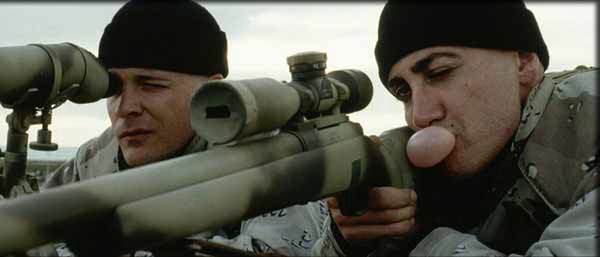
Plan: Having gotten lost on the way to college, Swoff (Jake Gyllenhaal) joins the US Marine Corps. Under the tutelage of Staff Sgt. Sykes (Jamie Foxx), Swoff becomes a sniper, and he forms a grudging friendship with fellow sniper Troy (Peter Sarsgaard). Their training leads them the Saudi Arabian border at the beginning on the first Gulf War and eventually into combat in Kuwait.

Yup, I choose an image of a scene that never takes place in the movie. I see it in pretty much every commercial, but it never happens. There's actually quote of a few images I've seen promoted that I never saw on the big screen.

That bugs.

Way back in 1999, Joaquin Phoenix and Tobey Maguire faced off 2 Stars, 1 Slot style. Inexplicably, though understandably, Maguire won that round. (Personally, I think that time has shown that they simply aren't vying after the same slot). By 2004, Maguire had another long lashed thespian chipping away at his claim to fame: Jake Gyllenhaal. They went after the same roles (Gyllenhaal was slated to take over web-slinging duties when it appeared that Maguire would have to bow out of Spidey 2 for health reasons; Maguire lost this role to Gyllenhaal). Again, inexplicably but understandably, in this 2 Stars, 1 Slot battle, Gyllenhaal took home the title.

Should he have won? Well, Gyllenhaal's got two movies out in as many months, while Maguire's got none. On the other hand, if you seriously want to pit their 2004 summer blockbusters against each other, you must have it in for Gyllenhaal.

More importantly, if they are interchangeable, then you should be able to imagine Phoenix or Maguire dancing around in nothing but two Santa hats. What's that? Phoenix would never? Maguire would, but you wouldn't want him to? Yeah, that's what I thought.

I think it's an age thing. (Phoenix and Maguire are less than year apart, but the youngest still has five years on Gyllenhaal).

Alright, the movie.

The main problem plaguing adaptations is the reliance on voice over. If the actors can do their jobs, a voice over shouldn't be necessary. Sometimes it helps to elevate the material, but it rarely seems necessary.

I bring this problem up because it affected Gyllenhaal's performance. There are scenes, whole chunks of the movie, where he doesn't bother trying because he knows a voice over will sort it all out later. Later, as the VOs become sparser, Gyllenhaal turns on the charisma and pathos, but it's not enough for me to forgive his earlier failings, even if his new physique remains awfully distracting.

If I am to choose my favourite actor from the movie with a double 'a' in his name, it's going to be Sarsgaard. Jason McBride posited that he may be the John Malkovich of the next generation, and his laconic delivery and droopy eye lids certainly suggest as much. Sarsgaard isn't sexy because he's a big ball of sensitivity and pain like Gyllenhaal. Rather, he's sexy because he's so damn apathetic. Like him or don't - he doesn't care. Don't want to go see this movie of his opening this weekend? He doesn't care. He's got another one opening a few doors down the hall in your local Cineplex. Of course, once he's subdued you with his opaque carefree ways, he's going to explode in a rage that, although you never saw it coming, manages to seem perfectly natural.

Foxx conveys energy and hilarious enthusiasm as someone who loves his job; Dennis Haysbert shows up to give one of the best performances of his career (yes, in five minutes. Take that, Dame Dench! You needed nine!); Lucas Black reappears to my surprise and pleasure; and I now believe that it is required by law for every war movie to contain a character Fowler and for him to be a fuck-up (get your leg up there, Fowler!). Chris Cooper does his old pals Mendes and Gyllenhaal a props and gets the funniest line in the whole movie during his three minutes. I, too, will maintain a constant state of suspicious alertness.

It's too bad that Sam Mendes (director), William Broyles Jr. (screenwriter), and Thomas Newman (composer) all suck. Mendes and Broyles attempt to make a war movie, in part, about war movies (i.e. Apocalypse Now, The Deer Hunter, Full Metal Jacket), but it never cements. And, again, they should be making a satirical comparison to the situation Swoff et al was facing then and the situation in the Gulf now, but they never make it over the hump. For a novel based solely in the horrors of war (or the more painful horror of waiting for it), the movie never gets past glorifying the violence it's supposed to be against.

As for Newman, well, remember all those times I accused you of being able to write only one score? I'm sorry about that. I was wrong. You can write another score. You can write one that doesn't at all suit the movie, doesn't elevate the scenes, and is, in fact, counter productive. Good work, Thomas. You're a winner.

And so it is. Mendes has squandered the good will engendered to him from his one critical success. The rest of you should be alright, though. B

Friday, November 04, 2005


The Passion of Ayn Rand (1999) and Naked in New York (1993)

The Eric Stoltz Double Bill!

Plot 1: Ayn Rand's (Helen Mirren) long term affair with her protégé, Nathaniel (Eric Stoltz), destroys her marriage to Frank (Peter Fonda) and his to Barbara (Julie Delpy), which Rand encouraged in the first place.

Plot 2: Jake Briggs (Eric Stoltz) looks back on his relationship with Joanne White (Mary-Louise Parker) as he attempts to get his first post-graduation play produced on Broadway.

They're not really plot heavy movies. In fact, I wasn't even going to bother with Passion until I saw Naked because I started to wonder about certain things. I'll get to them a bit later.

Not unlike Wednesday's movie, Passion is a big ol' lie. The disc jacket contained the number 15 in there somewhere, either suggesting that they had a 15 year affair or that they had a 15 year age difference. Neither is true. Rand was 25 years his senior, and their affair lasted about eight years. Technically speaking, they don't break up until much later in the film, but she effectively cuts him out of her life as soon as she finishes Atlas Shrugged.

Of course, she gets all huffed up and face slappy, yelling about her betrayal. My response: Stuff it, Rand. I mean, capitalism? That's your philosophy? Self-interest? You were out of your ever loving mind!

More importantly, the trailer and much of the beginning of the movie, including the opening monologue by Delpy, suggests that Barbara, too, was in love with Rand, and that was the real cause of her marital strife. Any time she and Nathaniel ran into any trouble I thought, "Well, of course! She's a lesbian!" And when they finally end things, she leaves him for . . . another man. Trust me, I was confused.

Meanwhile, back in the early nineties, another nothing special kind of movie put two people I really love together (Parker and Stoltz), and then threw in Ralph Macchio for good measure. And, to be honest, he was very funny in this movie. His antics and contradictory lines (e.g. "Is this because I'm gay? Because I'm not gay.") and general being-in-love with Briggs stuff just cracked my shit up.

Of course, it's been nearly a week since the last Stoltz sighting, and I've started asking myself one important question that should have come up earlier: Why is it that I love Eric Stoltz? And the sub-question: What, exactly, do I see in him anyway?

For a while in there, I thought he was simply the older version of another redhead I have inexplicably loved for years: Seth Green.

Now, you might be thinking that I, like the rest of my generation, fell for him as Oz during his Buffy stint. Except that I didn't. I know because the very first episode that he was in, this exchange occurred between my mom and I:

Me: [reads Seth Green's name in the "guest starring" credits] Seth Green's going to be on!
My mom: Who?
Me: Seth Green. [sees Seth and points] Him!
My Mom: [silence]

I can never quite pinpoint the exact role or year, even, when I became conscious of Green's existence. But I was, and there he was, and man, did Oz make me swoon. Of course, this devotion has proven itself out since I can reasonably consider him the most underused comedic talent of his age group, and he can charm the needles off a cactus. He's boyish and cute and self-effacing and non-threatening. He could be a screw up, or he could swoop in and save the day. I'd buy it.

But Stoltz, on the other hand, I'm even less sure about. I've been looking over his filmography, and, I swear, I only started seeing his work after I decided that I loved him. The closest I can come to picking a time when I saw him in something but didn't identify him as someone I loved was the first time I saw Little Women. So, 1994. And I know I didn't notice you because you couldn't hold a candle to Christian Bale (see Eflin April's Celebrity Crushes: The Original).

Sure, I appreciate you in the thankless role now, but I'm fairly certain that I thought very little of you at the time. Since then I've enjoyed you in things like Bodies, Rest and Motion, The House of Mirth, and, most notably, Some Kind of Wonderful. The more I think about that movie, the more it rocks. Also, as the reverse jail baiting (the jail bait baited him, but he never bit) drama teacher August Dmitri on Once and Again.

The more I think about it, as much as you cranked out the angst as a teen, as much as Valhere in say anything . . . /whatever you were in Fast Times was a perfect Peter Pan stoner dude, as much as I can believe you as a dandy in period pieces, if I am going to name your defining role, it's going to be as Jamie's ex on Mad About You.

That's right. He was in all of five episodes of Mad About You, and that's how I think of him. A somewhat smug, educated, slightly sarcastic yuppie, slowly wrapping his tea bag string around a spoon as Jamie rants on and on about who broke up with whom first. He who orders in waffles for breakfast. He probably eats them wearing a bathrobe over full pajamas, the New York Times folded crisply in front of him, as he plans his next Zabars trip ("Before or after the bookshop? Starbucks stop?").

I know, I know. I've thought way too much about this. But I do it, so you don't have to.

More importantly, it appears that Stoltz is a Sometimes Friend. He's nice enough, friendly and smart and funny, until his smugness overcomes him, causing him to unintentionally say something incredibly hurtful. So confident, so content. You may even describe him as poised.

Aside from the red hair and lovely light eyes, there's nothing particularly remarkable about him. This sentiment translates to any movie he has a leading role in.

So, for lying and subjecting me to your lies, The Passion of Ayn Rand gets a D.

Naked in New York, however, has one of my all-time favourite endings. I have been saying for some time now that a movie should end with the couple just breaking up. No cheating, abuse, or tears. No moving on something better. Two people who just didn't work out. So for that, plus Macchio, plus Kathleen Turner, plus Paul Guilfoyle, you get a C+.

Wednesday, November 02, 2005

I'll Sleep When I'm Dead (2003)

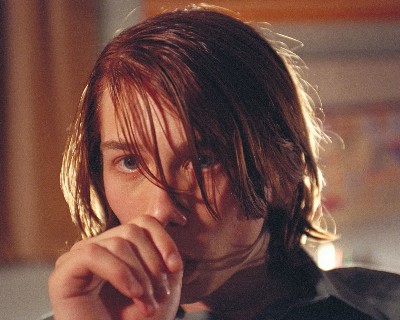
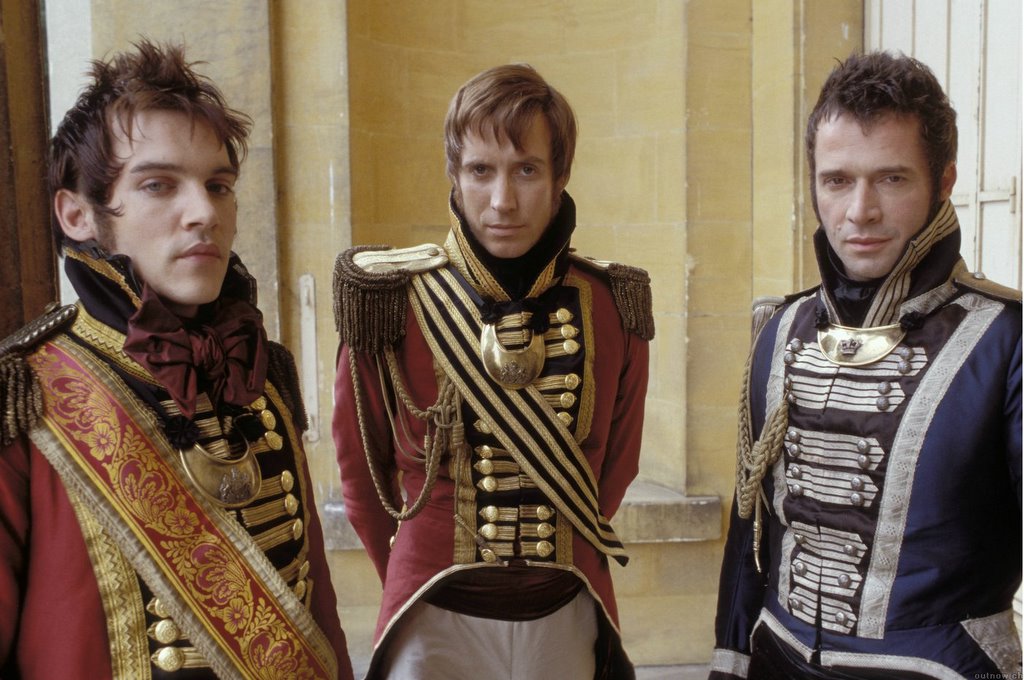
Brief: Will Graham (Clive Owen) has been in hiding from his mob life for three years. Following his brother Davey's (Jonathan Rhys-Meyers) suicide, Will returns to London to figure out why his little brother would kill himself, given that he was neither suicidal nor did he kindly leave a note behind.

The movie built on lies! And stupidity!

If you happen to see a trailer for this movie or read any other short plot descriptions for it, you might think that Will doesn't believe that Davey would kill himself, so he sets out to find his killer. That's what I sure thought the movie was about.

And, given that the preview and every plot description known to man tells you that Davey's dead and Will's got questions on his mind, you wouldn't think that they would waste a solid twenty minutes of 103 they've got on setting up his suicide and Will's eventual return, would you?

Well, you're wrong. Because they do. They do in order to bore and horrify you.

Also, given that Malcolm McDowell features prominently in the trailer and ads, it's pretty obvious who is going to be the villain of this piece. It's not like you see Will head home, start putting the pieces together, and finally heartbreakingly realize that Davey did indeed kill himself, and there's horrific reason why.

I think I would have liked that movie.

No one will successfully beat out Owen as the manliest man in Mantown for years, so it's fantastic when he does manly man things like be hard boiled and plot revenge. And when he throws in a little inner turmoil for good measure? All the better to make you swoon, my dear.

As for Rhys-Meyers, despite his fish eyes and androgyny, I'm starting to believe that he's the best sad pretty boy around. He's like the coolest, prettiest boy in high school, all sensitive and charming until the moment you piss him off. Then he dismisses you with an icy stare and a lip sneer. Push your luck beyond that, and he's likely to slit your throat in the lunch line.

I like what I've seen so far from director Mike Hodges since he made Owen famous with Croupier and turned Ryan Gosling into a bona fide sex god with Murder by Numbers. He's moody and arty and minimalist in a way that I enjoy.

So I place the blame squarely on writer Trevor Preston's shoulders, who didn't do anything worth note before this and hasn't had a screenplay produced since. Anyone who thinks leaving Charlotte Rampling hostage for all eternity with some nameless stooge is a good ending is clearly an idiot. D
Interstitial Advertising

As anyone who follows the A.V. Club link off the side bar knows, there is an ad that you can choose to skip that momentarily separates you from media commentary. Just now, the ad I happened upon invited me to click through to view another spot that will make me "laugh [my] head off."

I, however, did not need to click through in order to enjoy this burst of commercial humour.

Because, seriously? Ads advertising ads? That's hilarious in and of itself. It's weird and meta and tongue-in-cheek.

Whoever those geniuses are behind that Bud Light (if you can imagine) ad deserve a round on me.

Monday, October 31, 2005

Stay (2005)

Summary: Henry Letham (Ryan Gosling) announces to his psychiatrist, Sam Foster (Ewan McGregor), his plan to kill himself in three days, which is also his 21st birthday. Sam slowly becomes obsessed with saving Henry and trying to figure out why he would kill himself, but Sam is reluctant to discuss the case with his girlfriend Lila (Naomi Watts), who previously attempted suicide.

Alternate title: Why Marc Forster, David Benioff, and Ewan McGregor and I need to have a little talk.

Second alternate title: Why Ryan Gosling should give up the charade and call me already.

Let's start with the usual fall guy, at least from my POV: the writer. Benioff, I have to ask you one thing: What happened to you? Minus the ten minutes in the middle I've yet to see, I loved 25th Hour. Maybe I'm partial because I love "talky" movies in the first place or maybe it was the cast. Who knows?

Oh, wait, I do. It was two little words that are often viewed with contempt at the box office: character development. Good, old fashioned character development. The way you subtly manoeuvre every character, so s/he is forced to betray their true selves by the end. That was what I liked about you.

Even more improbably, I liked your version of Troy. I mean, no one liked Troy. Just me, those obsessed with sword and sandal epics, and those in need of some pretty boy slash fic inspiration. In which case they are better off watching The WB.

So what are you doing to me here? Either do something high concept, or do something twisty (not to be confused with twisted - get your minds out of the slash gutter), but you cannot effectively do both simultaneously. Personally, I dig this whole short-time period experimental thing you've got going on. Real changes happen to real people so slowly that they are usual imperceptible until the end. To speed them up, you put them in a pressure cooker: an unavoidable dark period looming on the horizon.

As for this crap, I don't know what to tell ya. The little remarks you wrote, the quiet back-and-forth barbs, the seemingly throw away moments, those worked. They were good. Heck, I even laughed. More on that later.

The rest of it, though? I don't know why you had to be so pseudo-complex. We could all see what was going on. And yet, you never seem to put all the puzzle pieces together properly. Funny how it all works out, isn't it? So, dear heart, go back to your novel, and read it over. I know it's your own work but read it as though it was not. Your characterization and character development are still some of the best around. Unfortunately, no one wants to see the plot development come to a dead halt because of it.

Moving right along, I'm now looking at you, Forster. What's your deal? You make Monster's Ball; everyone loves you. You make Finding Neverland, which I loved, but everyone did not. It felt forced to them. Unnatural. Not true to life. Inert, even. You can see why they might balk, right?

Nonetheless, you seem to have a gift with child actors and grown ups alike. Why that doesn't translate to your story telling, well, that's your problem. Actually, it's my problem since I keep watching your movies. Listen up: take what you do with actors and apply it to the story. Maybe even try putting the story first. Stop giving everything away with heavy handed foreshadowing and ham fisted "symbolism." Given how much you do it, it detracts from the story rather than helping it along.

Ah, now you, Ewan. Yes, I like to call you by your first name. Sweetie, why do you make movies? You don't seem to like it very much. You usually seem to bored or uninspired. Your too short pants here don't help. Aside from a few key scenes with Gosling, and I know that's reason enough right there, I don't get why you're doing this. Taken all together, you've given me 5 performances and one line that I've seen you wake up for. I think you need to take some time off or something. Keep riding the motorbike around the world. You seem to like that very much.

Ryan Gosling. There you are, dear Ryan. Appearing at a time when there are so few celebrity crushes worth having nowadays. Rockin' it harder than I thought possible back when you were on Breaker High. And then, even more implausibly, Young Hercules. Minus Remember the Titans, which I can easily forget, you disappeared off my radar for a few years. And then you reappeared in also somewhat lamentable Murder By Numbers, proving that you could supply the HoYay with the vapid Michael Pitt and make being a killer seem, well, damn sexy. You were a bad boy in spades. Of course, that didn't stop you from turning in compelling performances in the vastly different pictures. Suddenly, you've become someone I feel it necessary to watch. You're fast becomng dispensable in my stable of actors on whose quality work I can rely.

Plus you're so pretty! And Canadian! Now, if only you could find a project to work on with Seth Rogen, another crush worthy Canadian.

In the mean time, you are doing it again. You take a character threatening violence, claiming responsibility for the deaths of others, and you make him so vulnerable. Henry is helplessly wading through a world only he can see or understand, trying his best to navigate Sam through without damage. Even though he's busy with all that, he manages to find time for hilarious one liners (I particularly enjoyed it when he denounced the work of every other visual arts student as crap), as well as smolder at Sam when needed. The fact that McGregor occasionally seems enlivened by this passion speaks volumes about your acting prowess.

You always elevate the material with that passion (it must be passion for your craft), but it's not enough to overcome the limitations of the rest of the cast and crew. C+

Wednesday, October 26, 2005

28 Days Later . . . (2002)

Idea: Four weeks after a mysterious, incurable virus ravages the UK, Jim (Cillian Murphy) wakes up from a coma with no knowledge of what has occurred. London is pillaged and deserted, but he eventually meets others survivors. He and Selena (Naomie Harris) meet Frank (Brendan Gleeson) and his daughter, Hannah (Megan Burns). Together, they set out to find the source of a radio broadcast promising sanctuary for survivors.

It's a rare day when I sit down and watch an entire horror movie. So, if you are in to this sort of thing, get happy.

No matter what anyone may think of the hundreds of flicks I've seen, I've got no stomach for gore. The first few moments of this movie are spent establishing how the population became infected, which involves a Primate Research Institute, some animal activists, and projectile vomited blood. Trust me when I tell you I've not given anything away there. It happens a lot. Pint upon pint of vomited blood.

So, when all this was going down, I didn't think I was going to make it. I got up off the couch, headed towards my pretty red DVD player, set on ejecting this crap on out of there and into the nearest mailbox.

But then I remembered that this movie came highly recommended from two sources: Emily and Strangelove. He may not be my professor anymore, but I couldn't let them both down, could I?

So I stuck it out. Besides the vomited blood, director Danny Boyle and screenwriter Alex Garland don't really focus on the gore, which made the experience easier on me.

To be honest with you, I don't know what the big deal is about either. I've never read The Beach, but the Boyle-helmed adaptation of Garland's novel didn't really do it for me. While it is horribly maligned, A Life Less Ordinary isn't the best thing I've ever seen. And Shallow Grave? No, never again.

As the days passed since viewing, I mentally listed the things I wanted to comment on. I've come to realize that I sort of saw two movies: one about zombies, and one of those "violence to end violence" movies that just happens to have involved zombies. To talk about both, there's likely going to be spoilers ahead. Deal with it.

I don't recommend the one about zombies. First off, if the fictional British government hadn't been so busy telegraphing their nefarious schemes to the public, maybe they wouldn't have had this problem in the first place. I mean, Primate Research Institute? Could you be more obvious? Of course the activists are going to bust up in there!

Idiots.

Mind you, I was long ago convinced via some PETA-like documentary that the British take animal cruelty far too seriously. These cows were being trucked to a slaughter house, and some deranged protestor commented that seeing their eyes through the little grates was reminiscent of the pictures of Jews being taken away to concentration camps during WWII. Honestly, that's what she said.

Okay, I realize that she's just one person and not representative of the whole, but you get the idea, right? Anyway, I thought about this when the activists were "freeing" the primates in question, and I couldn't stop thinking about what a moronic move that was. Document it and protest and get people jailed, sure. But just releasing chimps into their absolutely non-natural habitat of England without at least finding out what was going on? That's how you end up with your flesh eaten and your blood infected, blood-vomit lady.

I promise to get down off my soap box very soon.

The second part of the zombie movie that made absolutely no sense was how quickly Major Henry West (Christopher Eccleston) divulged his very own nefarious scheme: an evil breeding plan! I mean, he couldn't wait a day to gain these people's trust, or see when his chained zombie would die of starvation, or, I don't know, ask the ladies to be part of your breeding plan? Plus, if you don't keep track of who was with whom and when, you won't know who fathered which kid, and thus you will be unable to prevent possible incest in succeeding generations. Then you end up with a bunch of people who look like Joseph Fiennes.

Now onto the other movie, the much better one. Violence to end violence movies are a difficult breed. When done well, they are exceptional, thoughtful, and thought-provoking pieces like Unforgiven. When they're not, they come off as beautiful but flawed sermonizing like Road to Perdition.The latter and this film may have come out in the same year, but this one hit the box office a good two weeks earlier. It's the better of two, I can tell you that.

While I'm not quite yet sold on Murphy as an actor, Jim's transformation during the movie was compelling and realistic. At first he cannot bring himself to defend himself against zombies who want to eat his flesh (at least not without a heaping helping of remorse afterwards), but little by little he finds enough resolve to kill (or at least let die) an entire troop of living men for trying to hurt the only people he feels connected to. Between Murphy, Boyle, and Garland, they give Jim enough nuance to make this metamorphisis both understandable and unsettling, without ever letting it dehumanize their lead.

Well played, boys.

As for the other players, Gleeson needs to stop giving me the impression that he's in every movie, Harris and Burns rock it pretty hard, and Eccleston hereby graduates from being known to me as "Poor man's Ralph Fiennes" to being his very own person. He's scary, he's endearing, he's everywhere, and I didn't even know.

Besides, Ralph Fiennes kind of sucks at being Ralph Fiennes sometimes, doesn't he? Let's give Eccelston some more English Patient-y roles, and let him make the ladies swoon, shall we?

A million words (give or take) later, and I still haven't gotten to the best part of either film. This movie contains the most inventive, beautiful, haunting, and despair filled cinematography I have ever seen. Ever. If Anthony Dod Mantle isn't rolling in it, I'll never understand why. I can't even begin to describe the way he perfectly frames every single shot. At first I thought he was over doing it with the long/tracking shots of Jim wandering through an abandoned London, but he later revealed that it was all part of a larger plan as he slowly switched to tighter and tighter close-ups while Jim gained control over his situation.

Here's to you, Mantle. You exist unparalleled in my mind.

I'd like to give these two movies two different grades, yet they are one and the same. Garland and Boyle may have decided to ignore glaring plot holes and moronic plot contrivances, but I cannot. B

Back to the real business of blogging: find something funnier than you, and linking to it. Enjoy!

Monday, October 24, 2005

Free Market Economy

a.k.a Watch a bunch of movies you’ve never head of day!

Recently, Graham made a tiny diction error, and it set off a fire storm of thoughts and a smaller one of comments. Nonetheless, I got to thinking about whether the individual reader is on the wrong cinematic train because most of the movies I review are ones they’ve never seen or heard of.

The short answer? Yes.

Perhaps I should indulge you (and myself) with a longer answer.

Simply put, how is I that I see so many movies/come to know about so many movies in order to see them? Long before Feria Films was a twinkle in my eye, I subconsciously made it my business to know about movies and their makings.

This next bit is going to sound really pretentious, hopefully unavoidably so: although many people are familiar with those behind the scenes of their fav films, I make a point of noting the director and/or writer(s) of everything that I like for one reason or another. It’s enough, I find, for most people to think that a certain movie looks “good” or has a certain someone they like in front of the camera. For the most part, that’s enough for me as well. Even so, I will often go see a movie with people I don’t like or that doesn’t look all that good in the promos because it’s got someone I like at the helm. Case in point? Elizabethtown. I love Cameron Crowe enough to put up with Jessica Biel, which is another way of saying a lot.

Future example? Despite its condescending labelling as “that gay cowboy movie” (is that a genre I don’t know about?), I will see Brokeback Mountain, probably on opening weekend. Why? Because it’s Ang Lee’s latest. I don’t need more than that. He had me at Sense and Sensibility.

Much like the people that make them, movie watching begets more movie watching. When you see movies or rent them, you have access to trailers, which only inspire me to watch more movies.

Of course, that last part is related to the cyclical nature of my blog. See, when I write I review, I hit up the movie’s IMDb page for information. I never would have found the page if I hadn’t been looking for a source for Feria Films’ sake. Now the site is its own related but separate addiction. Not only do I follow the filmography of any and all, but I check out the site even though it’s not related to the task at hand. If I suddenly remember that I like Sam Rockwell, for example, then I look him up to see what new projects he has on the go.

While an ordinary person might see a trailer or read about a movie and then promptly forget all about said flick, I – and this is where I just get nutty – make a note. Both Emily and Madison can attest to the fact that I used to keep pages and pages of double-sided post-its to make sure I saw everything that I intended to see. Now that I have a Zip account, the list is simply transferred there. So when I decide that I haven’t seen enough Jack Lemmon movies, I look him up on Zip and add a bunch of the titles to my list.

It’s an addictive and possibly degenerative disease.

It all comes down to three little words that Sarah was kind enough to point out: Free market economy. Graham, and all readers for that matter, are you currently reading interview books (The New New Journalism and Original Minds in my case) that are changing and challenging your interests and even goals? Are you addicted to high concept Fox dramas? Do you download Damien Rice songs and wonder why he’s suddenly the go-to guy for pathos in TV and movies?

No?

Does that make one of us on the right train and the other on the wrong? Probably not. There are more books you there than you will ever read, more TV shows than you will ever watch, and more music than you will ever listen to. Just the way it is.

Are you, however, on the wrong movie train if you are never interested in any of the movies I blog about? If I said no, that would deny the reason for the blog’s very existence. So of course you are. I watch more movies than most people will ever see, and I make no apologies for it. I read more reviews than you do, I watch more trailers, and I make more notes in my calendar about upcoming premieres. It’s my thing.

Happy Watch a Bunch of Movies You’ve Never Head of Day!

Saturday, October 15, 2005

Elizabethtown (2005)

Hypothesis: Drew Baylor's (Orlando Bloom) eight year attempt to design the perfect athletic shoe has turned into a fiasco - not only does it fail with in the public, it's actually recalled. He goes home to kill himself, but he is interrupted by his cellphone. His sister (Judy Greer) informs him that his father died while visiting family in Elizabethtown, Kentucky and charges him with collecting the body. On the way there, he meets a plucky flight attendant, Claire (Kirsten Dunst), who takes an instant shine to him, although he tries to put her off. In a desperate moment, he calls Claire, and they develop a bond.

And that's only the first act! Funny how much can happen so quickly, no? Well, you could define it as the first and second, but then you would have to account for at least four acts.

Isn't hypothesis the best word for the premise of a Cameron Crowe (writer/director, naturally) vehicle? My qualitative methods class defines a hypothesis as a proposed, possible explanation for phenomena, and it seems like the launch point for Crowe's always semi-autobiographical tales. Doesn't it feel like he's searching for and identifying patterns of human behavior?

Early in the film, Drew VOs (that's voice over, folks) that you come to a certain point in your life where you decide that everything really is black or white. That's kind of how you watch the film. Every scene, every line reading, every shot either works or it does. There can be plenty of nuance, but there are no greys.

It's hard to say that you love this movie when it's so deeply and pathetically flawed. Crowe has a preternatural understanding of small town Southern American life, and his movie flawlessly showcases his natural, effecting, and endearing love of America and rock 'n' roll. The soundtrack itself (Elton John, anyone? Tom Petty?) is the kind of mixed tape you make for someone who already loves you, but you still want to impress. What he does best, better than most writers and directors out there today, is lovingly display the disillusionment that fills the lives of twentysomethings. There are times when it seems that there is nothing worse in the world than graduating from college because what's out there is this . . . abyss.

During their marathon phone conversation, in a shot that you've seen in every TV spot, when Claire asks, "Do you ever feel like you're fooling everyone?", and Drew sighs, "You have no idea," I don't think there's a person alive who doesn't know exactly how Drew feels.

Despite her oversized flight uniform, I doubt I've seen better performance from Dunst (minus, of course, her early childhood successes that are second to none - seriously, have you seen Interview With a Vampire? Have you?). Her flirty, flighty (no pun intended) attitude is balanced by mystery that appears written into her genetic code; Claire is incapable of not holding back. She possesses the soft purr of a sex kitten not yet come into her own under that glorious umbrella. Not to downplay what I have enjoyed so much in the past, but she goes beyond the innocent and worldly ingenue usually portrayed by Natalie Portman in such movies.

Bloom and Dunst have just enough chemistry to keep me interested but not enough to get me to care. The real failure there is - prepare yourself for no shock - Bloom. While he's definitely star material, and he's already a matinee idol despite his exceedingly far apart nipples and possibly misplaced nose, he doesn't yet have the talent to bring the requisite complexity to the Crowe lead role. Crowe men represent this off-kilter combination of confidence and serious lack of self-esteem: he is certain that he's a great catch, and he has no idea how to convince the lady in question of that fact. With the right actor, this formula excels, allowing logorrhea to be seen as charming rather than excruciating. Bloom simply isn't at that level.

His best work - when the movie's at its best - occurs when Bloom falls silent, and the soundtrack is allowed to take over. Bloom somehow manages to project that quintessential embarrassingly raw emotion (e.g., rejoicing over a returned phone call, dancing in the woods, or carefully constructing a machine for his "dark date with destiny") that Crowe frames beautifully when Bloom isn't weighed down with dialogue. Outside of that, he tugs at the occasional heartstring and wrings a laugh or two from the audience, but it's never enough to sell the overall package.

Cameron, you need to abandon these pretty pin-ups, and return to something more substantial.

Bloom's shortcomings aside, it's the incredible misuse of the amazing Susan Sarandon that constitutes the movie's biggest mistake. Although I would normally delight in a widow learning to love life after her loss, it would be more meaningful if I had the opportunity to witness a single moment of grief instead of the shrewish selfishness we are put through. Don't get me wrong - Sarandon brings dignity and depth to the role that wasn't written to contain those attributes. Perhaps Hollie Baylor finding laughter and joy again would be more palatable if it didn't occur are her husband's funeral.

In fact, in true black and white fashion, I pronounced said scene the worst thing I've seen in a movie. Ever. And I've seen a lot.

I also announced that Greer was the best thing to happen to movies in the last ten years, and Emily countered with my beloved Mark Ruffalo. Of course, that would make the movie they appear in together the pinnacle of all things in the last ten years, and that's just not right, so we must have both miscalculated.

In the end, this sort-of The Apartment in reverse is wonderful and wrong. There are perfect moments and not enough of them. Crowe hasn't quite found the pattern yet. Not a complete fiasco, not yet a success. B+

Also, a list I fully support. Is someone at EW reading this blog or what?

P.S. To someone who shall go unnamed and unlinked (she wouldn't want you reading this anyway), who said something about me in a recent post: Thank you. It means more to me than you know.

Friday, October 14, 2005

Tim Burton's Corpse Bride

Premise: After fumbling his vows at the wedding rehearsal, Victor (Johnny Depp) sets out in to the woods to practice. When he places the ring on what he assumes is a twig, he accidentally marries the Corpse Bride (Helena Bonham Carter) instead. Victor tries to get back to the land of the living, while his fiancée, Victoria (Emily Watson), appears increasingly insane when she tries to explain what has happened to Victor.

As you well know, I try to live spoiler free. In fact, unless it's to warn me off something so awful it approaches ancient Macedonian proportions, I don't want to hear it. All I want to hear from someone who sees something in the theatre before I get the chance is that they think I will like it.

So imagine my chagrin when two people who spread falsehoods about seeing the picture with Sarah and I, went to see it without us, and proceeded to bad-mouth the movie to our faces, despite my protests of "I don't want to hear this" and "Stop talking the movie." Personally, I think those a pretty clear statements. Unfortunately, it was not enough to shut one of them up.

Well, Emily and Andrea, you can just cram it with walnuts the next time you want to behave like insensitive clods. Or filberts. Those were also suggested.

Although I highly doubt it, gentle reader, in case you happen to be suffering a moron attack of Em/Andy proportions, this movie includes musical numbers much like every other animated feature you've ever seen. Five numbers do not a musical make. And since the numbers are so delightfully written and staged (I love you, Danny Elfman!), you really have no cause for concern. Instead, you have cause for delight.

Let me state for the record that the technical aspects of stop motion animation with puppets made out of stainless steel armatures covered with silicon skin are beyond me. Trust me when I say that the two foot puppets looked amazing, and that the opening town sequence alone puts the similar Beauty and the Beast one to shame.

Well, to gothic romance shame. I do love that Burton never seemed to grow out of that early adolescent obsession with all things dark, dusty, horrific, and sexual. He's a great guy, that Tim Burton. Just great.

He assembled a crack team of people he's collaborated with in the past: co-director Mark Johnson, and screenwriters John August, Pamela Pettler, and Caroline Thompson. They went to town in this gothic fairy tale of lost love and the underworld. How they managed to capture Depp's nervous nuances is truly phenomenal.

A delicious and hilarious take on marriage and love as a wedding gift for his lady muse, Burton has chosen once again to treat his audiences to something refreshing, clever, and adorably off the wall as well. Keep up the excellent work, Tim. A

Thursday, October 13, 2005

Running on Empty (1988)

Premise: In 1971, Annie (Christine Lahti) and Artie (Judd Hirsch) blew up a naplam lab, blinding and paralyzing one man. They've been on the run ever since. In what should be his last year of high school, their eldest son, Danny (River Phoenix), wants a future of his own choosing, but he knows that would mean giving up his family forever.

Of course, there's a girl involved. And, because this movie came out when it did, it's Martha Plimpton. She's a believable actress, but she has a funny voice and looks kind of like a frog. Suffice it to say that I've always wondered what the big deal about Plimpton is.

Here's what makes this movie so great: it's heavy emotionally, but the full weight of it never really hits you until
the last minute. Somehow, Sidney Lumet's direction and Naomi Foner's screenplay draws out the tension so that the inevitable and impossible conclusion remains just that - a conclusion. Not an idea you figure out in the opening frames or half way through the movie. Not because the movie keeps you guessing with twists but because you get caught up in the character's motivations. It's a small scale character study/coming of age story that's one of the best I've ever seen.

And if you've been reading long enough, you know I'm a sucker for a good coming of age story.

I'm struggling with what to say about the performers and their performances. Hirsch and Lahti bring such depth of grief to their roles that you cannot fault their actions even if you don't support them. Hirsch's father struggles with teaching his kids subterfuge at every turn and still giving them something to believe in, while Lahti's mother functions as an interpreter, creating a peace with her newly rebellious son and his idealist father.

Phoenix functions as the film's moral centre, a kid stretched too thin holding his family together and too loosely hanging on to the one dream that could sustain him. Their lives deprive of him of any kind of future, and he desperately believes that he cannot go against them. It's the kind of thing that adults go through when their parents cannot care for themselves anymore, but he takes on the burden at too young an age with quiet grace.

Plus, they use Fire and Rain a lot. I like that song. A-

Wednesday, October 12, 2005

In Her Shoes

Idea: Rose (Toni Collette) and Maggie (Cameron Diaz) are sisters and the best of friends, which naturally means that they are also opposites. When beautiful Maggie's carefree ways finally push conservative and less-beautiful-by-Hollywood-standards Rose to throw her sister out of her life, Maggie tracks down the grandmother (Shirley MacLaine) she never knew she had and attempts to begin her life again in Florida while Rose reevaluates her life in Philadelphia.

It was especially important to me to point out the setting since I had absolutely no idea, and no one mentioned it for a solid hour, I swear. That bugged me.

I would also feel remiss if I didn't point out how sexy Mark Feuerstein can be. I always liked him just for being him, with eye-catching performances on The West Wing and in What Woman Want. I don't what it is about him - somehow he can be smarmy, nerdy, and delightfully caustic all in one turn. These qualities he plays to varying degrees depending on the role. But here, thanks to Jennifer Weiner's novel, Susannah Grant's screenplay, and Curtis Hanson's direction, he gets to be sexy. Congrats, Mark, you've made it.

Speaking of Hanson's direction, his deft hand in both comedy and drama serve the audience well. With another director at the helm, this piece would have surely descended into the realm of fluff, but he manages to showcase the movie's central bond with confidence and compassion.

Collette, from whom I always expect good work, and Diaz, from whom I occasionally expect good work, both turn in winning performances, and I like that their differences never seem to descend into odd couple cliché.

I'd say that MacLaine was also in top form, and she was, but it was thrown off by a sudden realization that her character is reverse Aurora. I'd like to pretend that I am not one for type casting, and I know MacLaine is a talented actress capable of many different things. Even so, there's this revelation in the movie that was just so false to me that it threw me out of the movie. I got back in pretty quickly, but I started imagining what Aurora would have done under similar circumstances and was disappointed by comparison.

I could have done without the numerous loving shots of Diaz's legs, but the movie's amiable. I enjoyed the time I spent with it. Hanson's ability to draw hidden depths out of the most unlikely sources certainly elevated the material, but it still feels like nothing special in the long run. B+

Bonus: I got to see a certain trailer on the big screen, which made me all the more giddy.

Sunday, October 02, 2005

Serenity (2005)

Premise: Malcolm Reynolds (Nathan Fillion) captains a firefly class spaceship, Serenity
, with his first mate Zoe (Gina Torres); their pilot - and Zoe's husband - Wash (Alan Tudyk); a mechanic with an engine fetish, Kaylee (Jewel Staite); and a mercenary for hire, Jayne (Adam Baldwin). Dr. Simon Tam (Sean Maher) and his younger sister, River (Summer Glau), are passengers aboard the ship. An operative (Chiwetel Ejiofor) depolyed by the Alliance seeks to terminate River in order to keep her secrets at all costs, reeking bloody havoc along the way.

For the Browncoats: The movie picks up shortly after the series left off, with Inara (Morena Baccarin) and Shepherd Book (Ron Glass) having moved on.

For the newbies: It's a space western, okay? Deal with it. Like most westerns, the crew may be outlaws, but they're not the bad ones. The Alliance (i.e. nefarious non-specific government organization) is much worse.

Writer/director Joss Whedon does what he does best here: create a large surrogate family whose close bonds are masked with heavy sarcasm. The white hats are never truly white with him, and his characters are all the better for it. Whedon excels where most TV writers fail daily: complex characterization, unique, catchy dialogue, and tightly paced plots.

In this big screen treatment for a pet project dead before its time, Whedon blends the exposition for those unfamiliar with the show seamlessly with plot elements. In lesser hands, the plot would have to come to a screeching halt for these moments.

And it's the moments we watch for. Browncoats (a term inspired by Mal and Zoe's background in the show and applied to fans) filled my theatre, and their shock, laughs, and tears were heartier than those I witness during even the most compelling movies. When was the last time you saw a movie where the entire audience gasped simultaneously?

That's the joy I derive from Whedon. Having been a faithful Buffy and Angel follower, watching anything he does is like re-reading a favourite book (you practically have the shot list memorized), and Whedon still manages to captivate and surprise you.

Fillion and Torres convey a crackling yet lived-in intimacy. A "hero" with nothing left to believe in, Mal depends on Zoe to function as his moral compass, who does this largely through deadpan humour. Frankly, if I had half of Torres' deadpan abilities, I wouldn't be sitting here writing about someone else. Of course, I suppose being that sexy helps as well.

Mal and Zoe find their perfect counterpoint in the ship's two refugees, Simon and River. Maher wears his heart on his sleeve as a brother obsessed with protecting his younger sister at all costs. Glau's insanity can be grating at times, but the love between these two serves as the film's emotional core.

Baldwin, Staite, and Tudyk fill out the rest of this lovable crew of soft-hearted, hard-bitten cynics with hearts of gold (tm,
Shack) with humour, warmth, and another healthy dose of sex appeal.


Seriously, how could a show with some many good looking people get cancelled so quickly? Evil Fox.

Props for David Newman's score. Good use of fiddle.

As much as I love Whedon and could easily put him on a pedestal, and as much as I appreciate him solving two of the three lingering mysteries from Firefly, there are moments when the cast struggles with his crazed, future-Western dialogue. In addition, the ship is so lovingly photographed that it seems like hours before you ever get a good look at a single character, and it's a fleeting one even then.

Also, I can respect and understand the Chinese-Americana combo as an explosion of Earth That Was' last two superpowers (in Whedon's belief), but why can't we have a subtitle or two for the Mandarin?

When I started to write this review, Serenity was sitting in the number two spot in terms of box office receipts, having pulled in a modest $10.1 million at the box office. The crux of this review, of this movie, doesn't occur on screen: if Whedon finds silver screen success, the chances of him returning to the small screen seem to diminish with every ticket sale.

And yet, he deserves it.

So here's to you, Joss. Browncoats should see this movie. Whedon fans should see this movie. Western fans should see this movie. Sci-fi fans should see this movie. Anyone who has ever wanted to see something they could enjoy, who has ever wanted to find characters they could root for, who wants to see some good looking men without their shirts on (sadly not Jayne, though), should see this movie. A

P.S. Watch what you say when you come out of the movie. People are very sensitive to my theories about the characters' sexual predilections.

After you see Serenity in theatres, if you are interested in cuddling up with a nice romantic comedy, check out It Happened One Night (1934).

I tell you truly, if you've seen any romantic comedy ever, at least one element of it came out Frank Capra's classic.

Plus, it's the first movie that features a man without his shirt on. And when that man is the lovable, bodice-ripping rogue Clark Gable, who can argue?